
Meet the Artisans

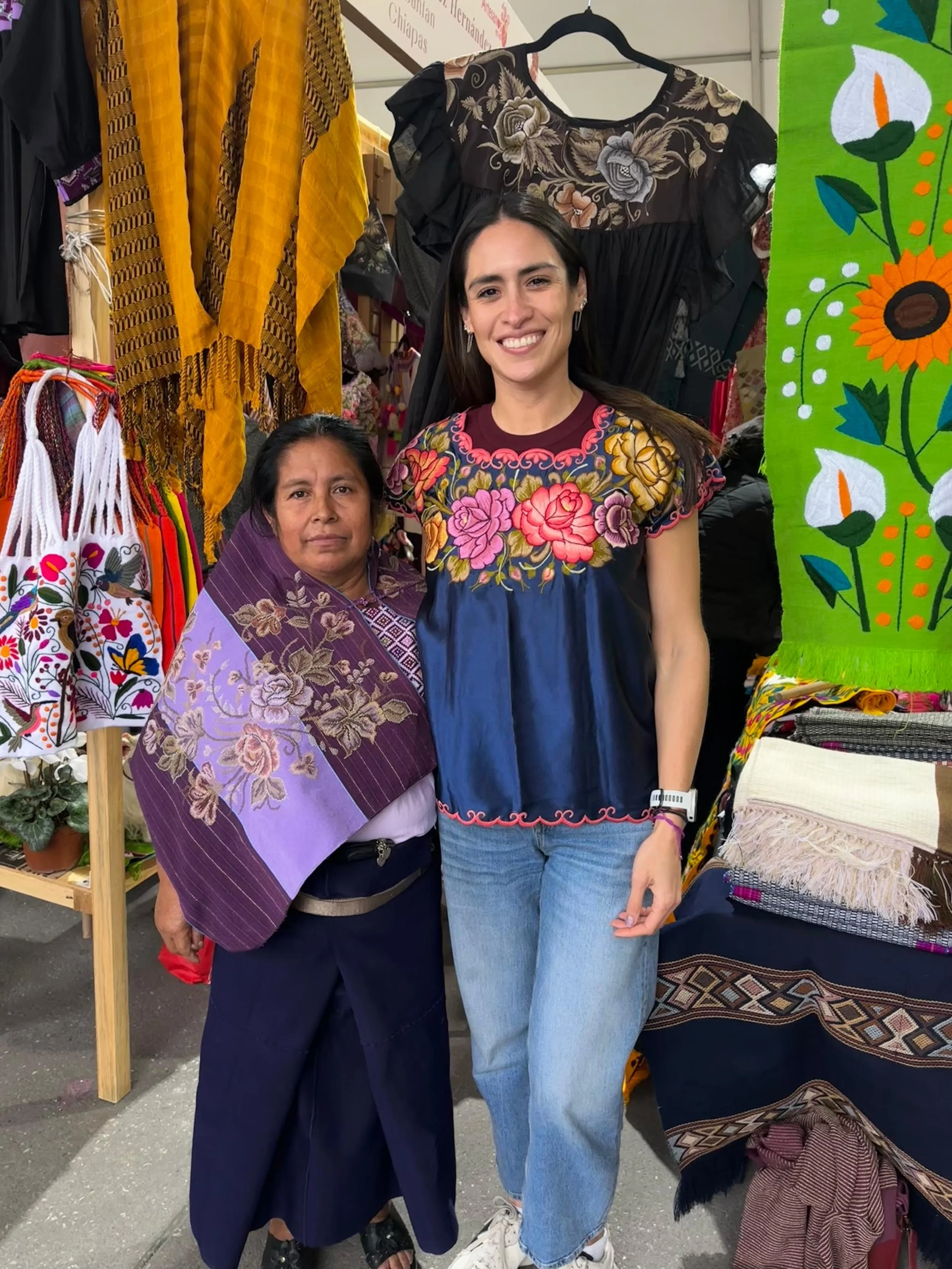
Pascuala (left), backstrap loom artist, and Carla (right)We started Rooted in Mexico to share with the world the beauty created by some of the most talented artisans across our country, those who keep traditions alive and honour centuries of ancestral knowledge, some rooted in pre-Hispanic times.
Across Mexico, each region and Indigenous community has its own artistic language, expressed through distinct materials, colours and techniques that tell the story of their land and heritage.
Each creation carries the unique essence, soul and story of its maker.
Celebrate with us the artisans who give life to Mexico's cultural heritage.

Chiapas, México
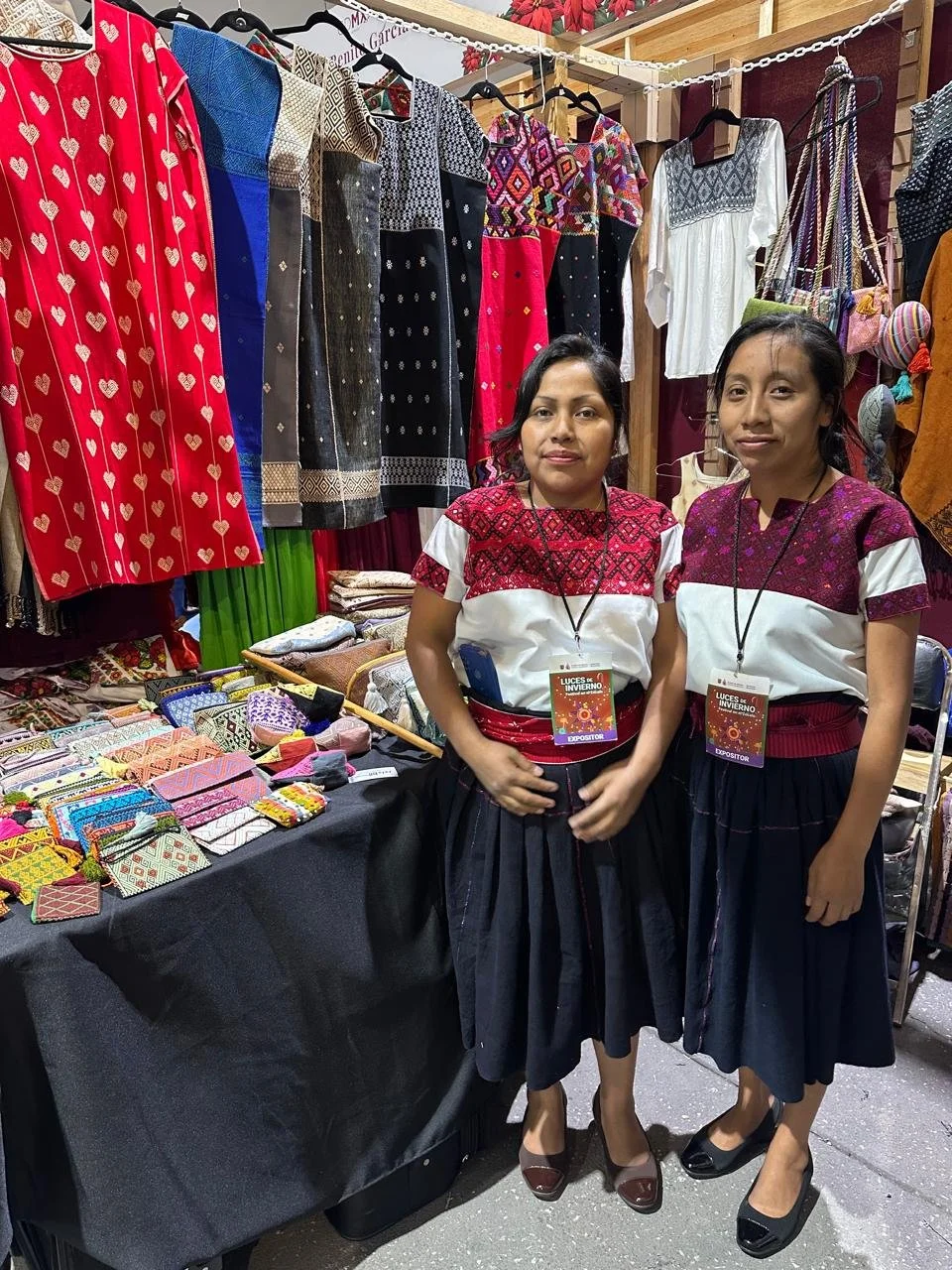
Ernestina (left) and her sister Cristina (right)
Ernestina, Tzotsil textile artisan
Ernestina is a Tzotsil artisan from San Andrés Larráinzar, Chiapas, where she has spent the past 18 years mastering the art of backstrap loom weaving. She learned through family tradition, a skill passed down through generations and deeply rooted in her community.
Working on a traditional telar de cintura, she weaves each heart and baby bib from locally sourced cotton threads across four carefully executed stages — a process that takes between two and five days to complete. The patterns she creates carry symbolic meaning, reflecting cultural knowledge woven into Tzotsil textile work over generations.
Every piece is made with patience, precision and care. A small, tangible expression of identity, skill and continuity.
What Ernestina wants you to remember:
“Quiero que sientan que fueron hechos con mucho cariño y amor y horas de trabajo.”
“I want people to feel that each piece was made with great care and love, and many hours of work.”
Erika, Chiapas embroidery collective
Erika brings together a collective of artisans from across Chiapas, creating a way for skilled makers to reach a wider audience. Each piece in the collection is handcrafted by members of this community, united by a shared tradition of hand-embroidery passed down within their families and communities.
Working with felt and cotton thread, the collective creates each piece stitch by stitch, a process that takes between three and six hours depending on the level of detail. The result is work that is quietly intricate, full of colour and unmistakably made by hand.
Every piece carries the care, time and creativity of the person who made it.
What Erika wants you to remember:
"We hope that whoever brings one of these pieces home understands the care and time that went into making it — stitch by stitch. Behind every piece is a community of makers keeping their traditions alive, and finding new ways to share them with the world."
Pascuala, Tzotsil textile artisan
Pascuala is a Tzotsil artisan from Zinacantán, Chiapas, where she has been weaving for 41 years. She learned through family tradition, a skill rooted deeply in her community and carried forward with quiet dedication.
Working with locally sourced cotton, Pascuala creates rebozos, cushion covers, table runners and clothing across four carefully executed stages, each piece taking weeks, sometimes months, to complete. Her textiles draw on ancestral motifs that reflect the natural world of her region: mountains, sacred points and the pre-Hispanic heritage of the Zinacantán people.
Every piece is a living expression of Tzotsil identity, made with skill and care passed down through generations.
What Pascuala wants you to remember:
"Quiero que, a través de nuestra artesanía y nuestros textiles, valoren y reconozcan la riqueza cultural de los pueblos originarios."
"I hope that through these textiles and crafts, people value them as a cultural representation of indigenous peoples."
Michoacán, México

Zeferino, chuspata weaver from Michoacán
Zeferino, an artisan from Puácuaro, Michoacán, has been weaving “chuspata” (a natural reed) for over thirty years. This craft has been passed down through generations in his family, preserving a tradition deeply rooted in the region. From his workshop, Zeferino creates extraordinary bags in countless animal shapes and designs, as well as beautiful pieces of kitchenware. Each creation involves three steps and takes between one and two days to complete.
What Zeferino wants you to remember:
"These pieces are made by artisan hands — and that's exactly what makes them worth something."
Oaxaca, México

Maria Antonieta & Jorge,traditional Oaxacan plastic weaving
María Antonieta and Jorge, artisans from Oaxaca, have been hand-weaving for the past six years. What began as a way to earn extra income soon became their craft and passion. Working with recycled plastic and wire, they create accessories and kitchenware using a traditional Oaxacan technique known for its strength and vibrant design. Each piece involves a three-step process and can take from a full day to several, depending on its size and complexity. Through their work, María Antonieta and Jorge hope people will value handmade art and treasure the time and dedication that each creation represents.

Oliva, traditional Oaxacan synthetic and natural fibres weaving
Oliva, an artisan from the Mixteca region of Oaxaca, has been weaving for more than thirty years. This craft has been passed down through generations in her family, and today, they all work together, each specialising in different types of handwoven products. From accessories like tenates — our most popular pieces, lovingly known as “treasure keepers” — to jewellery and kitchen items, every creation involves around seven careful steps. These weaving techniques are part of Mixteca culture, and each piece you take home carries with it a piece of their heritage and the spirit of their community.
Familia Pérez, black clay (Barro Negro) artisans
The Familia Pérez are black clay artisans from San Bartolo Coyotepec, in Oaxaca's Valles Centrales region. Their workshop is now in its third generation, with the craft passed down and practised within the family for the past 20 years. Each piece sold has been shaped by different members of the family — Andrea, Lisset, Eva and Armando — who all learned the craft the same way it has always been taught here: through family tradition.
Working with black clay drawn straight from a mine in their own community, the family shapes each piece across roughly twelve stages, a process that can take up to 15 days depending on the design. The clay is carved, burnished by hand with a quartz stone to bring out its signature sheen, and finished with fine, matte detailing. Every piece has its own name, and its imagery draws on the “milagritos” of Mexican tradition and the love shared within the family.
What the Familia Pérez wants you to remember:
"Que sepan que cada una de nuestras artesanías están elaboradas con mucho cariño y amor, que en las piezas están plasmados años de trayectoria y de experiencia."
"We want you to know that each of our pieces is made with great care and love — that years of experience and craftsmanship are held within them."
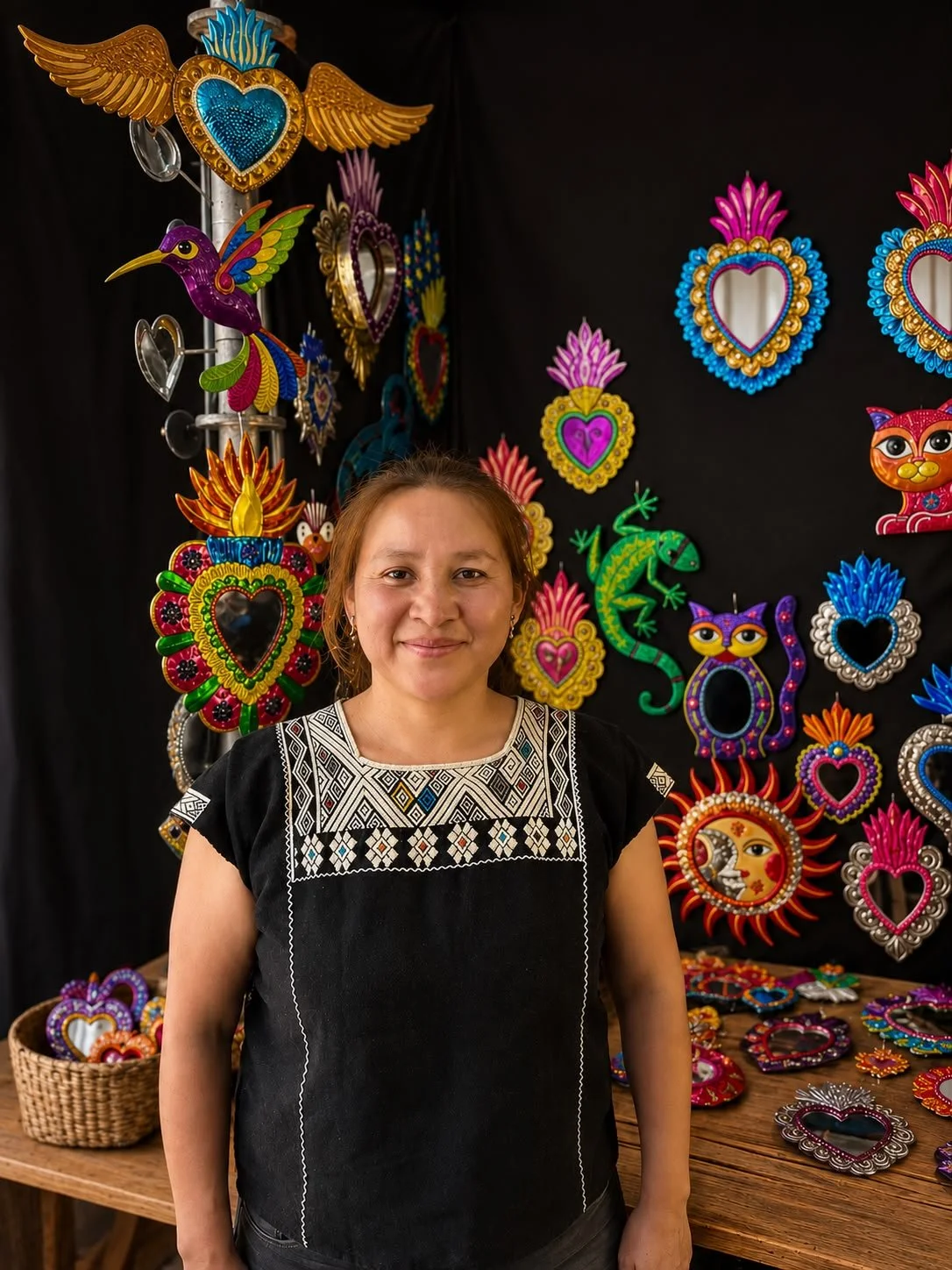
Maricela Aguilar Vásquez, tin metal artisan
Maricela is an artisan from Oaxaca, in the Valles Centrales region, where she has been dedicated to her craft for 30 years, a skill she learned through family tradition.
Working with tin sheet metal, solder, paint and glass, Maricela creates pieces such as her Sagrado Corazón (Sacred Heart) across nine careful steps — punching and shaping the metal, decorating it, and soldering it together — a process that takes around four days to complete. For Maricela, the piece holds cultural, symbolic and personal meaning all at once, representing the Sacred Heart in a form shaped entirely by her own hands.
What Maricela wants you to remember:
"Que es la representación del sagrado corazón, algo que llevamos en la cultura, en las creencias y en el corazón de cada familia."
"That it's a representation of the Sacred Heart — something that carries our culture, our beliefs, and the love of every family within it."
Puebla, México
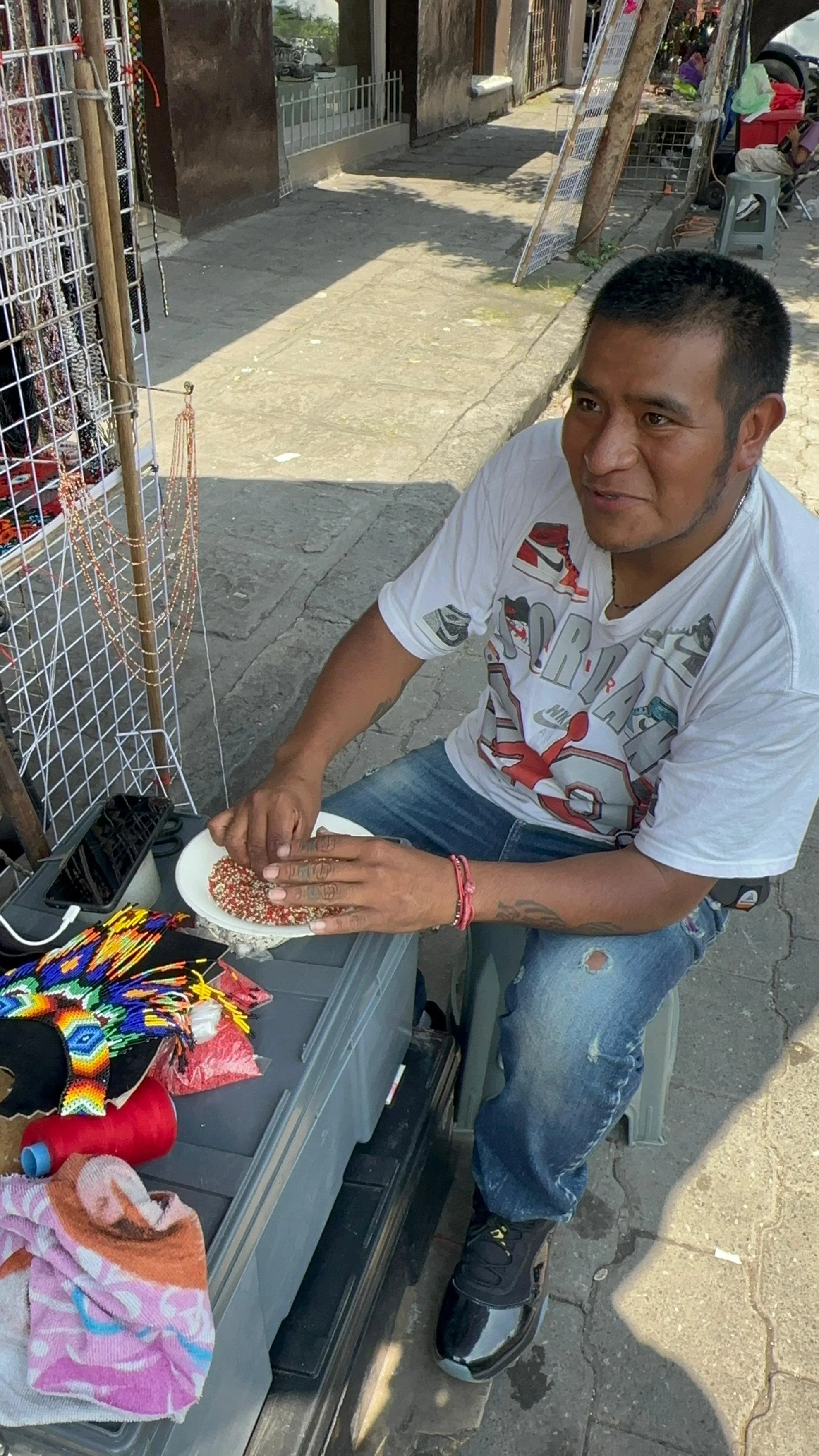
Moisés, Otomí beadwork artist
Moisés, an artisan from San Pablito, Puebla, has been weaving beadwork since he was seven years old, taught by his mother and inspired by his family’s deep-rooted Otomí traditions. For the past twelve years, he has dedicated himself to his craft in San Pablito, a community known for preserving Indigenous artistry and language. Working with chaquira beads and plastic string, each necklace he creates involves three meticulous steps and takes around four to five hours to complete. Every piece carries not only the patience and skill of his hands, but also the heritage of his family and culture. Through his work, Moisés continues a tradition passed down through generations.
What Moisés wants you to remember:
“Saber valorar el trabajo y que conozca las tradiciones mexicanas. Apreciar el trabajo que hemos dedicado, tiempo, paciencia.”
“We want people to value our work and learn about Mexican traditions, and to appreciate the time, patience and dedication we’ve put into it.”
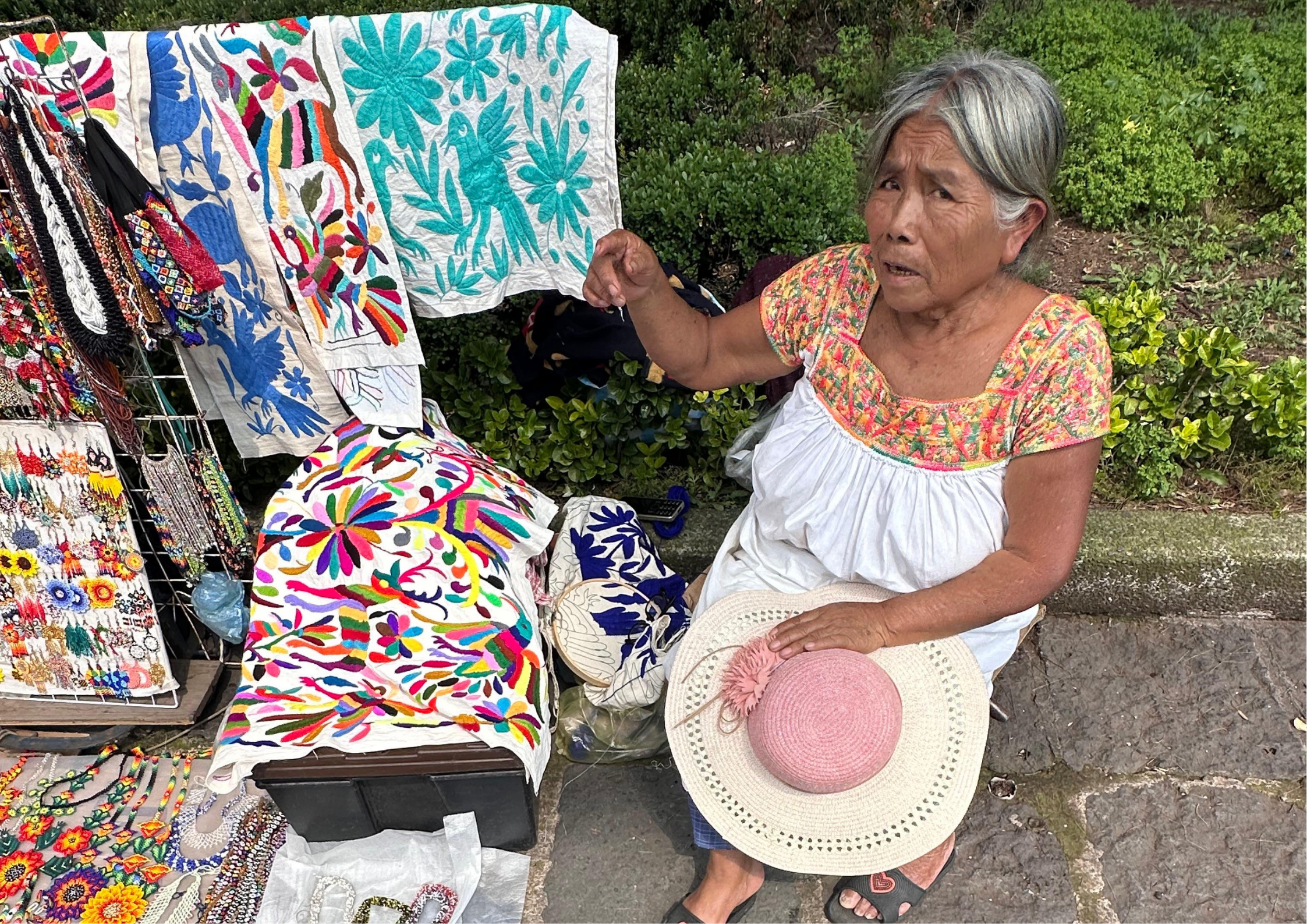
Maria Paula, Otomí beadwork artist
María Paula, an artisan from San Pablito, Puebla, has been creating beadwork for as long as she can remember, weaving with chaquira beads and plastic string in the traditional Otomí style. With more than forty years of experience, she is the root of her son Moisés’s artistry, having taught him the techniques and values that continue to guide his work today. Most of our communication with María Paula is through Moisés, as she mainly speaks Otomí — the language of her heritage and community in San Pablito. Her necklaces embody patience and vibrant colour, carrying forward a tradition that has lived in her family for generations.
Queretaro, México
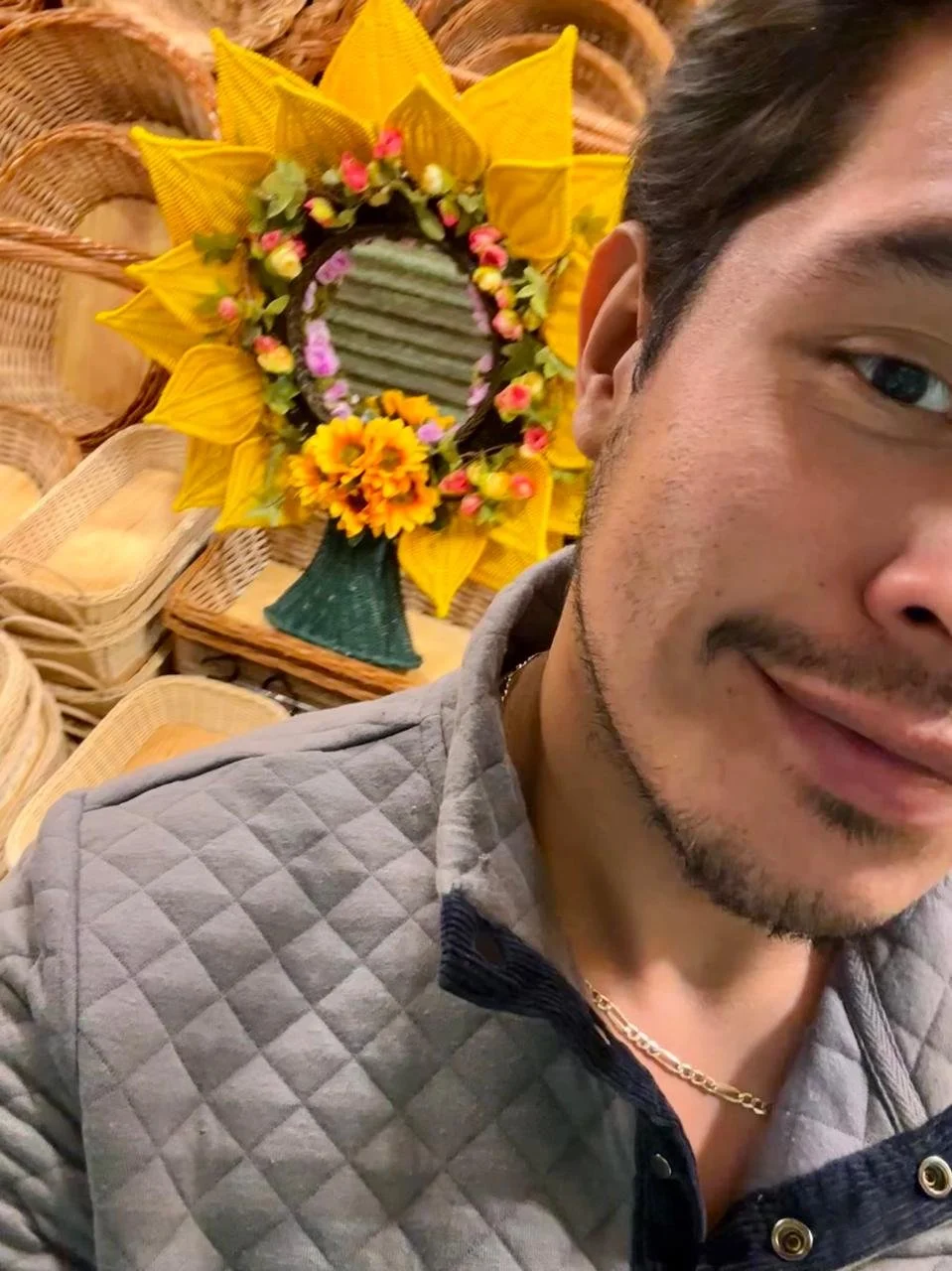
Octavio Flores, artisan specialised in rattan weaving
Octavio Flores, an artisan from Tequisquiapan, Querétaro, has dedicated the last seven years to the art of rattan weaving, though his family’s connection to this craft goes back much further. Working with natural rattan fibres, each of his creations takes a few hours of careful weaving, plus up to two days for preparation and finishing.
Octavio first learned by watching his father, whose shop is still lovingly cared for by the family in the heart of Mexico City. Today, he continues the tradition from his own workshop in Tequisquiapan. For Octavio, weaving is a way of honouring his father’s memory and celebrating his life’s work. His favourite creations are sunflowers — his father’s beloved flower.
Every time you buy one of Octavio’s pieces, he hopes you will remember:
“Que lo hermoso de las cosas, reside en lo fugaces que son. La flor más bella jamás verá dos primaveras, pero algo no siempre es bello porque dure.”
“The beauty of things lies in their fleeting nature. The most beautiful flower will never see two springs, but something does not need to last forever to be beautiful.”